The State of the African Continent and the Way Forward
Presented at the Odu'a Organisation of Michigan's Annual Gala Night 2002
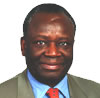
By Prof. Ibrahim Agboola Gambari
Under-Secretary General and
Special Adviser on Africa
Department of Political Affairs, United Nations
Detroit, Mi. USA
December 14, 2002
Introduction
Chairman, The Executive and members of the Odu’a Organisation of Michigan, distinguished ladies and gentlemen. It gives me great pleasure to be the guest speaker at the Odu'a Organisation of Michigan’s Annual Award Gala Night 2002. And I bring warm greetings from His Excellency, Mr. Kofi Annan, Secretary General of the United Nations.
Please, allow my wife and I to express our appreciation to the executive and members of your esteemed organisation for the kind invitation enabling us to be among the distinguished Nigerians attending this occasion. Indeed, it is rewarding that today, we assembled here to promote the socio-economic and political development of our beloved nation, Nigeria, and one of the key components, the Odu’a descendants from the “Cradle of Civilization”.
We must recognise, however, that proud as we should be as Nigerians, the fate of our country is inextricably linked to that of the African continent and in the context of a rapid globalising world. Hence, I propose to talk about “The State of the African Continent and the Way Forward”
The State of the African Continent and its Major Challenges
(a) Peace and Sustainable Development
In recent years, Africa has become the theatre of several wars and conflicts which promote insecurity and undermine the atmosphere necessary for socio-economic development. This condition also demonstrates the nexus between peace and sustainable development, because there can be no peace without development and no development without peace. Moreover, there can be neither peace nor development without justice.
In this regard, it is not surprising that most of the World’s Least Developed Countries (LDC’s) are situated in the continent with about 33 out of 53 countries in Africa characterised by high level of poverty. The linkage between peace and development in Africa was highlighted in the United Nations Secretary General’s report A/52/871-S/1998/318 of April 1998, and subsequent follow-up reports which, inter alia, drew attention to the unsatisfactory political processes in several African countries.
Consequently, the report stressed the need to address the root causes of conflicts because they have considerable negative impact on the socio-economic development not only of the affected countries but in the neighbouring countries as well.
Certainly, the proliferation of conflicts has led to a massive waste of the limited essential resources required for providing basic social services, such as health, education, etc., to the populace and for sustainable development. Fortunately, there are some notable success stories: 1. Angola is now at peace after decades of war; 2. War has ended in Sierra Leone; 3. Prospects for peace in the Democratic Republic of Congo are good.
Moreover, NEPAD has been introduced by African leaders which represents a home grown approach to the promotion of peace and sustainable development. The “New Partnership for African Development (NEPAD)” is laying the foundation for a constructive relationship between African countries and the developed communities in order to address the socio-economic and political challenges facing the continent. NEPAD is a plan similar to the Marshall Plan introduced in Europe after World War II.
I will return to this later in our discussion of the way forward for Africa.
(b) The Marginalisation of Africa and Globalisation
The present millennium is characterised by the relentless force of globalisation. Therefore, the choice facing Africa is whether the continent is prepared to be on board the global train of integration into the world economic order or risk being an increasingly marginalized continent.
Currently, Africa is the least industrialised continent in the world and there is a need to reverse the unfortunate trend of “de-industrialisation”. Indeed, the manufacturing sector that is still functioning does so at about 30 percent of installed capacity. Meanwhile, numerous policies for economic restoration adopted in the continent have failed to enhance industrial growth while the production and exports of primary produce still dominate the economic activities of the continent.
Compared to other developing regions, Africa also receives the least share of both private and direct foreign investments needed for industrialisation. An estimate in the World Investment Report by the United Nations Conference on Trade and Development (UNCTAD), noted that Foreign Direct Investment (FDI) inflows to Africa deteriorated sharply in 2000, plunging the continent's already low share in world FDI inflows to below 1 percent.
Although, the rate of return on FDI to Africa is 29 percent, which is considered the highest in the world and despite efforts to create a conducive environment, the total investment flowing into Africa is insignificant. Africa's share of total world trade has also shrunk to about 2 percent.
Furthermore, the overall aid to Africa is sharply decreasing from about $19 billion in the 1990’s to a current low of $12 billion. Similarly, during the same period, the share of global aid to Africa has shrunk from 37 percent to 27 percent. Moreover, the devastating external burden on the African region is further compounding the unfavourable socio-economic situation. Africa’s external debt at present is over $300 billion.
The debt burden (i.e. proportion of their foreign exchange earnings which they need to spend on repaying the external loans) often force most African countries to choose between spending on essential social services such as health and education and servicing and paying of the exorbitant debts. One casualty of this is that the poverty level in Africa is rising at an alarming rate with almost 52 percent of the population which still lives on less than $1 a day.
(c) Democracy and Good Governance
African countries must also address the linkages between the democratisation of the society, promotion of good governance on one hand and peace, stability and sustainable development on the other. Equity and justice promote peaceful environment while peace and security in the society are pertinent to sustainable development. The practice of democracy and respect for human rights are precious elements to promote equity and justice.
Good governance and accountability inculcate confidence in the states’ institutions and administrative processes which would equally enhance the private sector’s participation which is essential for economic growth and development on a sustainable basis. There must be orderly transfer of power based on all-inclusive processes. Furthermore, there are good prospects for good democratic practices through the “Peer Review Mechanism” being pioneered by NEPAD in the African continent.
(d) Impact of HIV/AIDS
The scourge of HIV/AIDS is destroying the foundation of the African society, with almost 29.1 million people in Africa having AIDS infections out of the estimated 42 million world wide. (source: The Washington Post, 27 November 2002). Although, HIV/AIDS pandemic respects no borders and is the global leading cause of death, the situation in Africa is the most serious because the productive population (18-45 years) is seriously affected with a devastating impact. Therefore, the pandemic has become a serious economic and security catastrophe destroying the productive population essential for development.
In light of the current pandemic, the United Nations Security Council at a meeting in January 2000 addressed the impact of the epidemic on Africa which resulted in the creation of a reference group to examine the relationship between war, civil strife and the spread of HIV/AIDS. In addition, the Millennium Summit of 2000, organised by the United Nations adopted these initiatives among others which include the recommendations that at least 90 percent of young people have access to necessary information and education to protect themselves against HIV infections by 2005, access for 95 percent of young people by 2010, and the total reversal of the spread of the epidemic by 2015.
In continuation of efforts to halt the spread of HIV/AIDS pandemic, the United Nations Secretary-General initiated the creation of a “Global AIDS and Health Fund”. The aim is to mobilize the sum of US$7-10 billion annually for combating the pandemic. At the moment, the initial contributions totalling about US$3 billion is being disbursed towards the objectives of the fund.
The Way Forward
In response to the challenges facing Africa including Nigeria, the United Nations has given the continent much support and assistance within the mandate provided by its principal organs and in the spirit of the Charter. For example, the largest UN peacekeeping operation in the world, with over 17,000 soldiers, is currently in Sierra Leone (UNAMSIL). Moreover, in the UN Millennium Development Goals, Africa is accorded priority concern. Nevertheless, a lot remains to be done both by the UN and by Africa's leadership to help Africa achieve the ultimate goal of durable peace and sustainable development.
In this regard, African Heads of State, determined to address Africa‘s challenges “in their own way” have taken the initiative of presenting the New Partnership for African Development (NEPAD) whose main objectives are: enhancing the promotion of conflict prevention, management and resolution mechanisms, setting up a programme for development of infrastructures, proposing a programme for increasing intra-African trade and exploring further strategies for negotiating further debt reduction.
In order to achieve these goals, mechanisms for coordination including steering and implementation committees at the level of Heads of State have been established for NEPAD. The committee reports to the summit regarding the status of its activities geared towards implementation. Meanwhile, the G8 Group of countries has endorsed NEPAD and each of the G8 has appointed a Special Envoy of NEPAD. Moreover, the goals of the Millennium Declaration adopted by the Special Session of the General Assembly in 2000 and the 57th session of the General Assembly Resolution A/57/7 of 16 September 2002 indicated strong international support for NEPAD.
Nonetheless, no amount of external support can replace internal efforts to participatory and democratic process in Africa especially at the local community level. The approach would go a long way towards alleviating poverty in Africa since 83 percent of the region's poverty is located in rural areas. A model of good governance built from the bottom up is crucial for success in the search for consensus and harmony in the multi-ethnic populations of most of Africa's countries. Greater investment in agriculture to ensure food security is another key element of service to the local communities. It will help to stem the tide of waste of foreign exchange on food importation while strengthening the agricultural sector of our economies.
Furthermore, African nations must further promote scientific knowledge and information technology in order to make development a part of the culture of the continent. We must prevent cultural boundaries from blocking the process of development and economic progress. African Universities and research institutions should increase their cooperation towards contributing to the promotion of a science based orientation for Africa.
In addition, the issue of women empowerment must be taken seriously by African states through the establishment of gender equality in policy framework, particularly in education, employment, economic processes and political participation. The development of any society requires the participation of women in all spheres of life. Moreover, the youths also need to be acknowledged as the jewels of the future and encouraged by African governments. Looking after the needs of the youth is a great investment in a peaceful future for Africa because it makes the youth less vulnerable to being recruited for violent activities during ethnic, religious and other conflicts in African Nations.
In general, there are no shortages of analyses of the African condition but the more difficult challenge is to identify the solutions and to have the political will and commitment to embark on the process of change for the better. In this regard, we must, inter alia:
- go back to basics, the continent must invest massively in education and health;
- resuscitate agriculture and increase food production for our rapidly growing population;
- create employment for the populace - especially the youth in urban centres, so that the chances of their being recruited for violent acts and anti-social behaviour will be minimized and
- empower women and encourage their full participation in national and continental affairs.
Mr. Chairman, permit me to mention, at this juncture, the appropriate role of the organisation such as Odu'a in the promotion of solutions to the problems with which Africa is faced. In this regard, there are basically two different perceptions of social cultural organisations like the Odu’a.
One view holds that organisations such as tribal, town, local government or even state associations are by orientation parochial, and in a country like Nigeria, they may inadvertently contribute to the disunity and divisions in the larger society. Loyalties of members are first and foremost to these bodies before the larger entity, which is the country itself.
However, another view is that organisations such as these underline the diversity of the country which if properly harnessed for grass roots development can become a source of the country's greatness rather than disunity or even disintegration.
I subscribe to the latter view and this explains my presence here today. I am also a strong believer in future greatness of Nigeria based on the positive contributions of its diverse, rich and highly enterprising parts. Furthermore, I regard myself as a pan-Africanist in the belief that Nigeria cannot realize its full potential except in the context of a peaceful, prosperous and more united Africa - a continent which must never consent to its marginalisation in an increasingly globalising world.
I would strongly recommend that your association should be free to deliberate on topical issues and make constructive suggestions that will help move the issue of national and state concerns in a positive direction. After-all, you have within your ranks, well-educated, professional, and upwardly mobile individuals whose views are well respected in your respective local communities. Your exposure and experience in the most technologically advanced country in the world should give you positive advantage..
Indeed, members of the Odu’a Organisation here in the United States have a lot to contribute towards the development of Nigeria in particular and Africa in general.
One urgent matter which should be addressed is how to reverse the negative image of Nigeria and Nigerians. We all have a lot to do to improve on this, although it is the activities of a few amongst us that contributed to the tarnishing of our image. Let us resolve to refrain from actions that are against the laws of our host country and make it our duty to also help put a stop to it by others.
As a complement to the improvement in our external image should be the efforts to attract foreign investments to Nigeria and Africa as a whole since the requirements for socio-economic development through industrialisation cannot be met from local sources alone. There is a need for an aggressive campaign to attract foreign capital into the key sectors of our economies and also to help in setting small-scale enterprises through joint investments and partnership.
However, the truth is that unless we improve on our external image and assure investors of the stability of our body politic we are not going to get any reasonable inflow of capital. And we should never forget that there are more attractive markets that have advanced further in the process of liberalization of their economies.
As mentioned earlier in my presentation, Africa is unfortunately the developing region of the world with the least share of direct foreign private investment.
Conclusions
African countries are experiencing serious socio-economic and political difficulties but the African condition is not beyond repair. A continent that survived the slave trade, colonialism and apartheid should be able to meet its current challenges.
The first step must, however, be for African leaders to take concrete actions to put their houses in order. With our respective houses in order, the partners in the developed countries would be encouraged to work genuinely to address the impediments to the sustainable development and durable peace in Africa.
Lastly, I wish to commend the objective of Odu’a Organisation of Michigan in the United States. Your organisation’s outlook should be broad enough to cover the concerns of Africans in the Diaspora and its activities should be a source of inspiration to all including those who are attending this year’s Annual Gala Night. Let us all continue to contribute our quotas to the progress of our fatherland and to the African continent from which we come.
I thank you for listening.
What do you think? |
View Posted Comments

Professor Ibrahim Gambari holds the record of being the longest serving Ambassador/Permanent Representative of Nigeria to the United Nations. (January 1990 to October 1999). He currently serves as the Secretary-General's Special Representative to Angola and is primarily responsible for providing momentum for the Angolan peace process.



 Guides


